Instructional Design
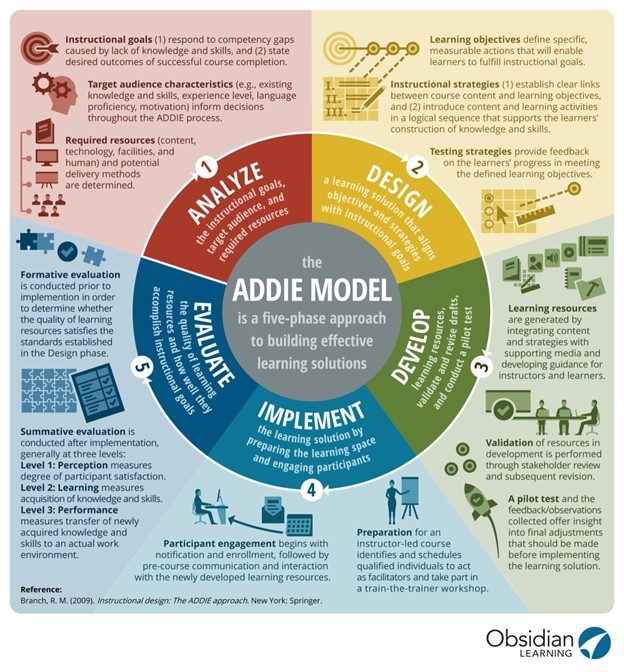
1. ADDIE Model
(Analysis → Design → Development → Implementation → Evaluation)
Definition
The ADDIE Model is a systematic, iterative instructional design process that guides the creation, testing, and refinement of learning experiences. Each phase ensures that objectives, assessments, learning materials, multimedia, and engagement strategies are aligned.
Application to Distance Education
- Moves online course creation from “uploading content” to strategic design
- Supports Quality Matters (QM) alignment: Objectives ↔ Activities ↔ Assessments
- Guides multimedia planning, LMS structure, accessibility, and RSI
- Encourages continuous iteration based on student analytics and assessment data
Connection to My Research & Professional Work
ADDIE is the core framework behind my project “Expanding Online Career Pathways at SEARK.”
I apply ADDIE to:
- Develop fully online, career-aligned Canvas courses
- Integrate AI-supported features (analytics, tutoring prompts, automated feedback)
- Strengthen training for PEP faculty delivering online instruction
- Standardize course design across online programs and pathways
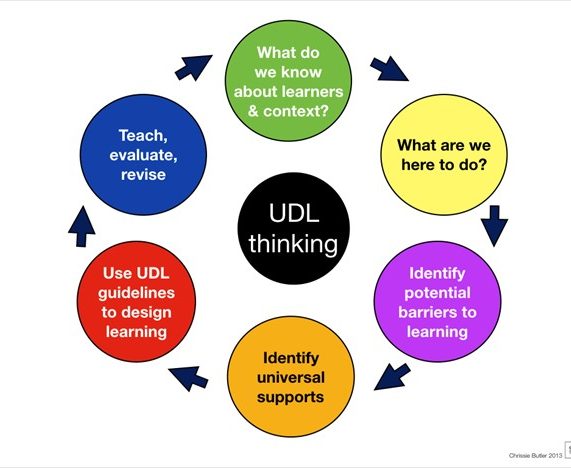
2. Universal Design for Learning (UDL)
(Multiple Means of Engagement • Representation • Action & Expression)
Definition
Universal Design for Learning (UDL) is a neuroscience-based framework for creating learning environments that meet the needs of all learners. UDL ensures multiple ways to engage, access information, and demonstrate understanding.
Application to Distance Education
UDL is central to high-quality digital learning environments:
- Provides accessibility for diverse learners (ability, background, technology access)
- Encourages flexible formats (text, audio, video, visual)
- Supports choice, autonomy, and scaffolded pathways
- Aligns with ADA, Section 508, QM Standards, and SEARK’s commitment to equity
Connection to My Research & Professional Work
UDL aligns directly with SEARK’s mission to ensure equitable access, especially for:
- Incarcerated learners in the Prison Education Program (PEP)
- Students in rural areas with inconsistent broadband
- Adult learners balancing work, parenting, and education
I apply UDL by: - Designing Canvas modules with alternative formats
- Adding captions, transcripts, and alt-text
- Using H5P, quizzes, scenario-based learning
- Offering learner choice in assessments and pacing
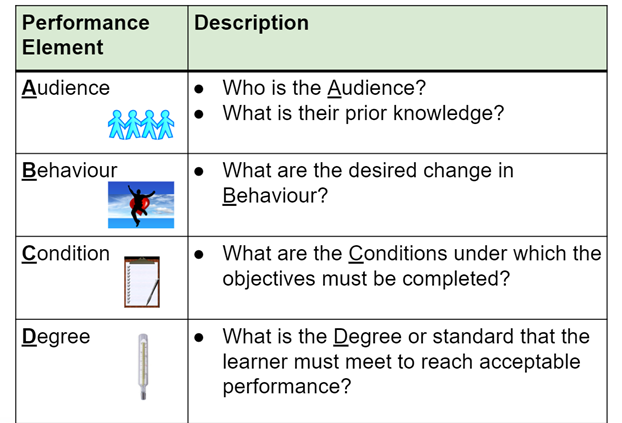
3. Mager’s A-B-C-D Model of Learning Objectives
(Audience • Behavior • Condition • Degree)
Definition
Mager’s A-B-C-D Model offers a proven method for writing measurable learning objectives. Each objective must state:
- Audience – Who is learning?
- Behavior – What observable action must they perform?
- Condition – Under what circumstances or tools?
- Degree – To what accuracy or proficiency?
This structure ensures clarity and alignment across learning activities and assessments.
Application to Distance Education
- Creates transparent objectives for fully online and hybrid courses
- Strengthens alignment with assessments, materials, and activities
- Reduces learner confusion—especially in asynchronous environments